I intended to try and answer the question ‘What’s the difference between stage and non-stop racing?’ in my last post. However it turned into something slightly autobiographical. However it still didn’t really make the point that is relevant to the answer to the question. That point is that I am a stage racer. All my experience is of stage races. The two non-stop races I’ve done are the 100 and 184 mile events along the Thames. In both cases I did them without sleep or rest and so essentially turned them into single stage races.
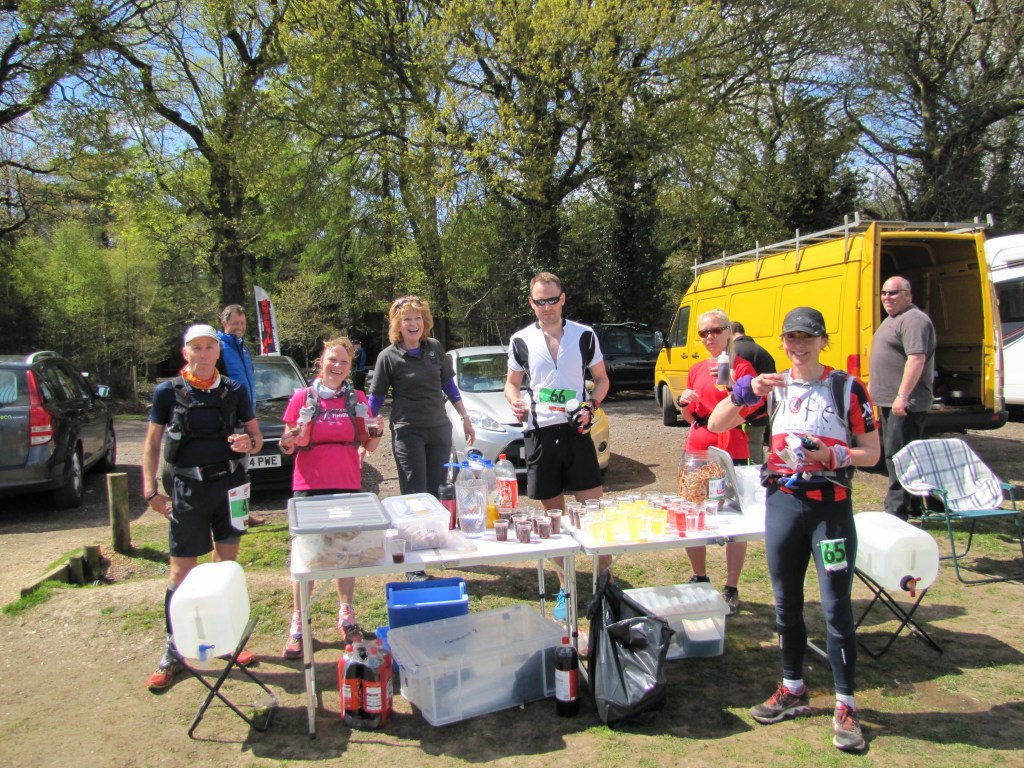
So what is a stage race? to answer this I will describe the format of stage races I’ve done, others may be different but all mine have followed a broadly similar format. A stage race could be two days or it could be a week. The distance and start time of each stage is defined. Typically the stage might start between 6 and 9 in the morning and be around 50km in distance. The clock stops when you reach the finish of the stage until the start of the next stage. The Marathon Des Sables has always had a stage of 50 miles and many other stage races have copied the idea of having one ‘long’ stage somewhere in the event. In reality the long day of the MDS is followed by a rest day and the total time permitted for the stage does allow competitors to split it into two parts and sleep overnight at a checkpoint if they so wish. Generally there will be a number of checkpoints along the stage. Dependent on the race the spacing will generally be between 5 and 10 miles, although some might be closer and some further apart depending on safety requirements and the availability of suitable locations for a checkpoint. Water will always be available at a checkpoint. On the MDS only water is available, other races might have sweets, snacks, cola – an ultra-race has been described as jog between picnics!
Anyway the point of all this is to explain why part of the reason for my failure to complete the Spine Race was due to not appreciating the difference between a stage race and a non-stop race, and, more relevantly, not being smart enough to modify my behaviour accordingly.
So I am used to starting a stage at a particular time, running to the end, the clock stops and I then have until the next stage starts to recover – usually at least the evening and overnight. As a result I try and minimise the time spent in checkpoints and don’t worry too much if I reach the end of the stage perhaps a little dehydrated and under-fuelled as I usually have in excess of 12 hours to sort myself out before I have to run again. Checkpoints are places to spend as little time at as possible (even the ones with Freddo Frogs at them) as it adds to my total time, whereas once I finish the stage I can spend as much time as like eating and drinking without affecting my race time.
The Spine Race is a non-stop race. That doesn’t mean you can’t stop. The Safety Teams do not come out with whips if they notice anyone’s dot has stopped moving. If a dot stops moving for any length of time they will investigate but that is for safety reasons, not to satisfy any sadistic urges to make runners move. What doesn’t stop is the clock, it starts when the starter says go and it stops when you reach the Border Hotel, that is your race time.
If we try and map the Spine Race onto the format of a typical stage race then a Spine Race checkpoint is most like the overnight halt of a stage race. It has food, sleeping facilities and access to your drop bag, much like a typical stage race halt. The Spine Race equivalent to a stage race checkpoint is slightly more ad-hoc. Water may be obtained on the Spine Race potentially from Safety Teams or from taps or – if you are feeling brave and have a filter – from any natural water sources on the route. Shops, cafes, and pubs can also be used to buy provisions.
So much for the similarities, now we come to the huge difference and one of the reasons I ended up in such a delirious, sleep deprived state. On the Spine Race you can stop for a maximum of 6 hours at a checkpoint or until it closes, whichever comes first. This compares with anything up to 18 hours on a stage race – and that 18 hours doesn’t go onto your race time. Conceptually I knew that I would have to stop and sleep, unfortunately there was still a part of my mentality which kept telling me that resting was adding unnecessarily to my race time. Sometimes my brain is not my friend. Some people sleep out on the course. This was never my plan and I didn’t. Whilst planning the race I couldn’t understand why anyone would. However having run the race (most of it) I can now see why that might be attractive.
I arrived at all the checkpoints during the day. Ironically if I had made it to Checkpoint Five it would have been at night. However as it closed at 2am I would still have had to leave in the dark. The only checkpoint I spent anywhere near 6 hours at was Checkpoint Four. I think the transformation I underwent there indicates that if I had spent more time resting earlier on I could have been in a much better state later in the race and may even have been able to finish (although possibly not with the cellulitis).
As I’ve been writing this I’ve come to realise the reason I DNF’ed wasn’t because it was a non-stop race but because I didn’t take enough responsibility for me. As I’ve mentioned before, I’ve run a lot of Extreme Energy races. Their philosophy is that they will do all the organisation, you just turn up and run. The MDS is the most ‘self sufficient’ stage race I’ve run because I had to carry all my food and kit for the week. However you have tent mates who will keep an eye on you and make sure you eat and look after yourself. The Spine Race actually says ‘There is very little hand holding on this race. We expect you to travel with a degree of self-sufficiency and skill which sets this race apart from others.’ Either approach is perfectly fine as the competitor knows what is expected of them and what they can expect from the race.
My first error was even before I started. The event supplied GPX files for each stage, which was excellent. I did briefly think that waypoints at each checkpoint would help. There is no reason I couldn’t have added them, If I had I could have used my GPS unit’s ‘go to’ function to keep me pointing in the right direction when I was tired and couldn’t find Checkpoint Four for instance – but I didn’t. When my left foot developed its first small blister I got the medic to check the right one. He said it was battered but not blistered. This didn’t stop me from taking responsibility for my own foot and padding it – but I didn’t. On Blenkinsop Common another runner changed his socks. So did I but it really wasn’t a sensible idea for me. I could have thought for myself – but I didn’t. Later in the race when it was cold at night I didn’t eat or drink during the hours of darkness because I didn’t want to be fumbling around in the dark with my gloves on. I could have (for instance) made sure I had some concentrated Tailwind to drink, which could have provided energy, caffeine and liquid with no fumbling – but I didn’t. I could have tracked my time in checkpoints better and got more rest, in fact I could have thought about my total amount of sleep altogether more – but I didn’t.
The more I think about the event, the more ‘but I didn’t’ moments I find. It wasn’t one big thing that made me DNF, it was a whole sequence of events to which I failed to respond to correctly. The net result was a rapid decline in my mental and physical state. The more bad decisions I made, the more tired I became and the more bad decisions I made. The positive I can take from this is that I now know, deeply know, what will happen if I don’t take responsibility and look after myself. I only got as far as I did because Rachel and Felix effectively took charge of me at Checkpoint Four and repaired some of the damage I had done. Unfortunately by then it was only postponing the inevitable. If I am to succeed in 2022 I will have to channel my inner Felix and Rachel and look after myself right from the beginning, eat enough, drink enough, sleep enough, look after my feet enough. I’m not beating myself up about it, I just need to make sure I understand all the points I got wrong and work on my mental preparation so that by the 19th of June 2022 my mental attitude has adjusted enough to make taking responsibility for myself second nature. Two immediate changes are waypoints for the checkpoints and an instant, easily accessible energy source for times when I need a quick boost. I’m sure many more things will be added to the list over the next 11 months.
Anyway my recovery is going well. The blisters have pretty much healed although skin is still being shed. The cellulitis has gone, there is just a slight swelling form the original sting/bite. I’ve been for a few runs and I haven’t died yet. This is all good as in less than two weeks time I’ll be on the start line of the Lakeland 100. The Only Way is Pennine – but we are taking the scenic route!
 The Only Way Is Pennine...
You can tell that you are an engineer Colin – Ok, that didn’t work,let’s find out why and start again…. 🙂
LikeLiked by 1 person
Great insights Colin. Prior to the recent Blackwater Trail I’m sure I recollect you commenting in the H&T Group that you rarely carry more than the race organiser specifies. Would that have been a feature of your ‘stage race’ mindset?
LikeLike
That is an excellent question! It is certainly part of my ‘racing’ mindset and yes, it kind of goes along with my overall stage racing experience and the approach that I won’t stop to use any extra kit so why carry it? On the Spine Race the minimum kit will stop you dying but needs augmenting according to conditions if you are to complete the leg with any degree of certainty. I may return to this is a future post!
LikeLike